

Pharmacy Assistant
Daytime In-Person | Evenings & Weekends Online
The Pharmacy Assistant program ensures you're prepared to support pharmacists and pharmacy technicians in your local community pharmacy.
- Credential
- Diploma
- Program length
- 26 weeks (6 months)
- Supervised practicum
- 6 weeks
- ABES employment rate
- 86.49%
- Next start date
- Dec 7, 2026
- Delivery
- Daytime In-Person | Evenings & Weekends Online
Pharmacy Assistant Program Overview
The Pharmacy Assistant program was created to meet a steady demand for well-trained, competent pharmacy assistants. Pharmacies are a vital part of the health care system, and as the population grows, so does the need for skilled people to work in them.
The program is built around the full range of competencies and hands-on skills you need to be ready for the workforce and to give patients professional, high-quality care. It runs for six months and is open to work permit holders, so you can build a professional career in Canada.
What you'll learn
Master Student and Typing
Master Student and Typing
Students learn essential skills, strategies and mindsets required to excel in academic pursuits and become effective lifelong learners. This course explores the holistic nature of academic success, covering topics such as time management, critical thinking, personal wellness and resilience. Students engage in self-reflection and practical applications to transform their approach to learning, moving from passive information absorption to active, engaged learning.
Communication
Communication
This course prepares students to communicate professionally, empathetically and effectively with patients, families, pharmacies and interprofessional healthcare teams. Topics such as self-awareness and non-verbal communication with Indigenous and First Nations people shape each student’s mindset as a “difference maker” in patient-centred care settings.
Medical Terminology
Medical Terminology
This course introduces the fundamental principles of medical terminology used within the pharmacy and healthcare environment. It covers terminology for the body as a whole, its major systems and their functions. A primary focus is vocabulary relevant to pharmacy practice, including the terms for common diseases and the classifications of drugs used to treat them.
Pharmacy Practice
Pharmacy Practice
In this course students learn the various roles of pharmacy assistants, technicians and pharmacists in the pharmacy industry, as well as the history of pharmacy and its relevance in the modern world. Students also learn about Canadian pharmacy law, the code of ethics and the different pharmacy regulatory agencies.
Pharmacology
Pharmacology
This course introduces the basics of pharmacology: how drugs work in the body, different drug forms and how medications are given. It also covers common drug names (brand and generic), their uses and side effects. Students explore major body systems, related health conditions and the medications used to treat them, as well as drug classifications and how medications are grouped by their actions.
Pharmacy Calculations
Pharmacy Calculations
Students learn fundamental mathematical operations and practise solving basic calculations applied in pharmaceutical contexts. Key topics include decimals, conversions and calculations using ratio and proportion methods. The course also covers determining the amount of medication prescribed, duration of supply, percent strengths and business math.
Non-Sterile Compounding
Non-Sterile Compounding
Students learn why compounding is essential in patient care and become familiar with the equipment and techniques used in extemporaneous compounding, applying pharmaceutical calculations throughout. Hands-on activities go hand in hand with theory, so students learn to follow regulations, standard operating procedures, quality assurance and quality control.
Kroll Software System
Kroll Software System
The Kroll Software System is used to process prescriptions, keep records, review drug utilization and manage inventory. Students practice tasks on Kroll such as entering patient and prescriber information, filling prescription orders, keeping pharmacy inventory up to date, entering patient drug plans and processing third-party billing.
Practicum
Practicum
The final practicum gives students direct practice with individuals, groups or communities. It exposes students to the complexity of work in the health services field. Students apply theory and integrate what they learned in the Pharmacy Assistant Program into real-life experience.
What training here actually looks like
Hands-on interactive learning
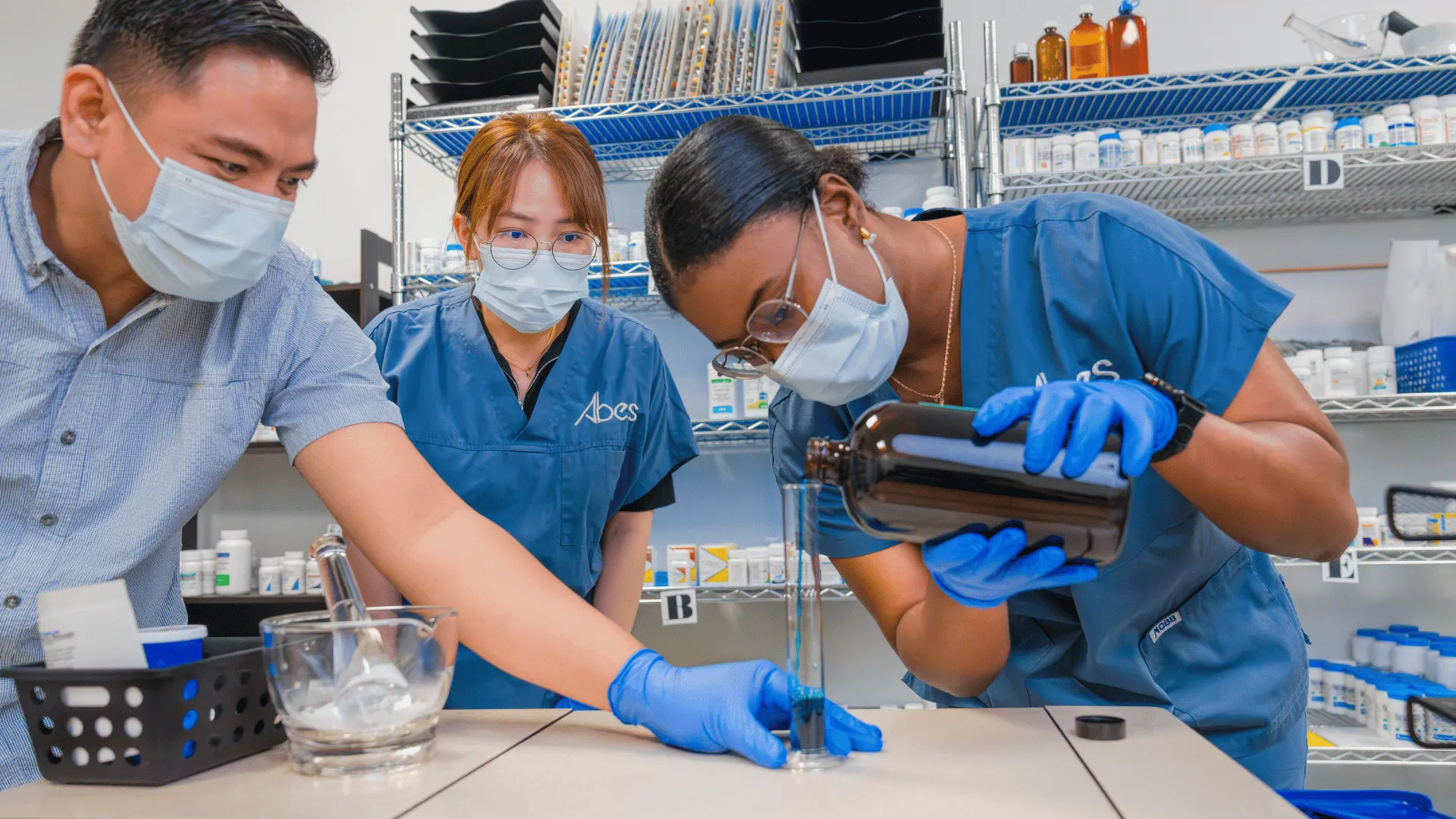
Our instructors come from many years of experience in the field, offering practical experience and hands-on training. Our students perform various pharmacy tasks during their classroom experience such as; compounding, reconstitution, building blister packs, billing on Kroll system, and customer interactions.
Practicum placement included
ABES partners with industry leaders to connect you with employers and provide in-the-field experience. Often these partners hire graduates directly from their practicum, before graduation. This has been the key to our success over the last 35 years.
- Your supervised practicum
- 6 weeks
- Practicum partners
- Costco Pharmacies
- Walmart Pharmacies
- Shoppers Drug Mart Pharmacies
Career outcomes
Pharmacy assistants support pharmacists and pharmacy technicians by handling patient interactions, preparing and packaging medications, maintaining prescription records, and managing inventory.
Where this program leads in Alberta
- Graduate placement rate
- 86.49%Source: ABES 2025 graduate employment rate
- Average wage in Alberta
- $15–$28.75hourly range$21.28average hourlySource: ALIS Government of Alberta
Day to day tasks
- Receive orders
- Dispense medication
- Compound pharmaceuticals
- Fill and label medication
- Perform inventory counts
- Confirm deliveries
- Maintain patient records
- Prepare invoices
- Reconstitution
- Insurance Billing
Who's hiring?
- Rexall
- Alberta Health Services (Hospital Pharmacies)
- Shoppers Drug Mart Pharmacies
- Loblaw/Real Canadian Superstore Pharmacies
- Sobeys/Safeway Pharmacies
- Walmart Pharmacies
- London Drugs Pharmacies
- Costco Pharmacies
- Independent Pharmacies
Alberta labour market for this occupation
Pharmacy Assistant Program Reviews
Graduate stories
“My instructor's patience, guidance, and support created a positive learning environment where I felt comfortable asking questions and improving my skills.”
“I learned so much about how a pharmacy operates, and those activities weren't just exercises. They were skills I could immediately apply during my practicum.”
“The pharmacy teacher and the staff are very patient, caring, and will do everything they can to see each student be successful, even after the course.”

Admissions
Work permit holders study alongside permanent residents and citizens here, and graduates go into community pharmacies, long-term care centres and hospitals.
Admission requirements
Standard admission
- High School Diploma
- CLBA 7 if English is your second language
- Keyboarding Speed of 15 words per minute
- Canadian Citizen, Permanent Resident, Conventional Refugee Status, Valid Work Permit
Mature admission
Students who do not meet academic requirements listed under standard admission can apply through academic assessment and must:
- be out of high school for at least 2 years
- successfully meet the entry levels on ABES' Academic Assessment
Pharmacy Assistant Tuition
One investment. Funding available to most student applicants.
Total tuition$12,999
Includes text books and scrubs
Licensing & accreditation
- Alberta Advanced EducationLicensed private vocational school under the Private Vocational Training Act (Alberta)Verify with Alberta Private Career College Registry
- Years operating35 years of career training in Calgary — established 1991
ABES College Student Reviews
Pharmacy Assistant Program Comparison
| What you are comparing | ABES College | SAIT |
|---|---|---|
| Program Length | 6 months | 6 or 8 monthsSource: SAIT: Pharmacy Assistant program page (Program Length) (2026) |
| Cost | $12,999 (all included) | $9,810.50 (tuition only)Source: SAIT: Pharmacy Assistant program page (Cost) (2026) |
| Practicum Placement | Guaranteed in Calgary | May take place outside CalgarySource: SAIT: Pharmacy Assistant program page (Practicum Placement) (2026) |
Frequently asked questions
How long is the Pharmacy Assistant program at ABES?
The diploma runs 26 weeks full-time and is offered in the evenings, online, or in the day at our Calgary campus. That includes a 6-week supervised practicum in a working pharmacy.
How much does the Pharmacy Assistant diploma cost?
Tuition is $12,999. Alberta Student Aid grants and loans and Indigenous sponsorship (for those who qualify) can all help cover it. An admissions advisor can tell you what you qualify for and answer questions about payment options before you commit.
Can I enroll if I hold a work permit?
Yes. The Pharmacy Assistant diploma is now open to work permit holders, not only permanent residents and citizens. Bring your permit details to your admissions interview so we can confirm your eligibility.
Where do Pharmacy Assistants work?
Pharmacy assistants work in community pharmacies, long-term care centres, and hospitals.
When does the next intake start?
Pharmacy Assistant intakes run throughout the year, so there is usually a start within a couple of months. The next start date is shown at the top of this page, and an admissions advisor can confirm which upcoming intake still has seats before you commit.
Will I find work after I graduate?
86.49% of ABES graduates from this program are employed. This is highly influenced by the guaranteed practicum placement which connects students to employers. Majority of our learners receive job offers during their practicum and prior to graduation.
Articles about Pharmacy Assistant
Revolutionizing Healthcare Education: The Power and Purpose of Simulation Training at ABES
Pharmacy Assistant vs. Pharmacy Technician: Which Career is Right for You?
Pharmacy Assistant Career Opportunities in Calgary: What to Know
Planning your studies
See all articles- How to Seamlessly Bridge the Gap from Health Care Education to Employment
- 6 Financial Assistance Options for ABES Students that Make Education Accessible
- Your Educational Journey at ABES College: Complete Guide to Admissions, Program Options & Student Life
- Career Colleges vs Traditional Universities in Alberta: What’s Right for You?