
Health Care Aide
Daytime In-Person | Evenings & Weekends Online
An accredited program that prepares you to write the Alberta HCA Registration Examination (AHRE) and register with the College of LPNs and HCAs of Alberta (CLHA).
- Credential
- Certificate
- Program length
- 32 weeks (8 months)
- Supervised practicum
- 2 weeks
- ABES employment rate
- 99.14%
- Next start date
- Nov 23, 2026
- Delivery
- Daytime In-Person | Evenings & Weekends Online
Health Care Aide Program Overview
The Health Care Aide program equips you to become a certified Health Care Aide (HCA), and work alongside medical professionals, to provide direct care to patients who are ill, elderly or disabled. Health Care Aides work in a variety of settings including hospitals, long-term care facilities, and hospices.
The HCA curriculum at ABES College was developed in collaboration with the College of LPNs and HCAs of Alberta (CLHA), a provincial governing body, that regulates these professions to protect and serve the public. In 2001, ABES College was the first private college to introduce the Health Care Aide (HCA) training program in Alberta, in partnership with post secondary schools, NAIT and Lakeland.
Currently, the Government of Alberta offers a bursary to support Health Care Aide students. You may be eligible to receive up to $9,000 to cover the costs of your program. Speak with our admission advisors to learn more.
What you'll learn
Health Care Aide Role and Responsibility
Health Care Aide Role and Responsibility
This course introduces the role and responsibilities of a health care aide across care settings in Alberta, with a focus on safe, ethical, person-centered care. Learners study the provincial legislation that guides care, how to work within a health-care team, and how to follow employer policies and their job description. They also learn to identify, manage and prevent environmental hazards to protect both clients and themselves.
The Human Body, Health and Chronic Illness
The Human Body, Health and Chronic Illness
Learners study the systems of the human body and the stages of growth and development across the lifespan. They learn about the most common chronic illnesses and how to give safe, evidence-informed care based on each client’s diagnosis, needs and care plan. The course also covers ways to support clients and their families through dying and death.
Communication and Documentation in the Health-Care Environment
Communication and Documentation in the Health-Care Environment
This course builds the verbal, written and electronic communication skills a health care aide needs to work well with the care team, clients and families. Topics include documenting in client records, completing reports, problem-solving and handling conflict. Learners also practice communicating across cultures and working through barriers caused by disease, illness and aging.
Providing Person-Centered Care and Comfort
Providing Person-Centered Care and Comfort
Learners gain the skills to help clients stay independent and meet their care needs according to individual care plans. Training covers daily grooming and hygiene, safe walking, mobility aids and wheelchairs, and several lift and transfer methods focused on client safety and comfort. The course also covers clients’ nutritional needs and safe food handling to provincial standards.
HCA Clinical Placements I and II
HCA Clinical Placements I and II
Learners complete two separate clinical placements at two different points in the program, each under the direction of a regulated health-care professional. The first clinical placement takes place in a continuing care setting, such as supportive living, designated supportive living, a seniors’ lodge, long-term care or a group home. The second clinical placement may be completed in continuing care or acute care. In both clinicals, learners provide person-centered care and support to clients and their families under the supervision of an ABES College instructor.
Meeting Complex Care Needs
Meeting Complex Care Needs
Building on earlier courses, this course teaches advanced skills including range-of-motion exercises, wound care, tube feeds, catheter and ostomy care, specimen collection and respiratory care. Learners practice taking accurate vital signs and are assessed on it, and they learn to assist with medications within the legal scope of an Alberta health care aide. This course is part of the HCA Preparation for Employment provincial standard.
Special Activities for Clients with Various Health Conditions
Special Activities for Clients with Various Health Conditions
This course gives particular attention to meeting the care and comfort needs of clients living with dementia. Learners also study care strategies for clients with mental health diagnoses, developmental delays or physical disabilities, as well as care for infants and children in home care settings. The course also prepares learners to support clients receiving hospice, palliative and end-of-life care.
HCA Consolidated Clinical Placement Experience
HCA Consolidated Clinical Placement Experience
In this final placement, learners work in continuing care or acute care settings under the direction of a regulated health-care professional. They are paired with a “buddy,” an experienced health care aide who meets the Government of Alberta’s competency requirements. The buddy works alongside the learner and gives direct or indirect guidance while the learner provides person-centered care to clients and their families.
What training here actually looks like
Hands-on interactive learning
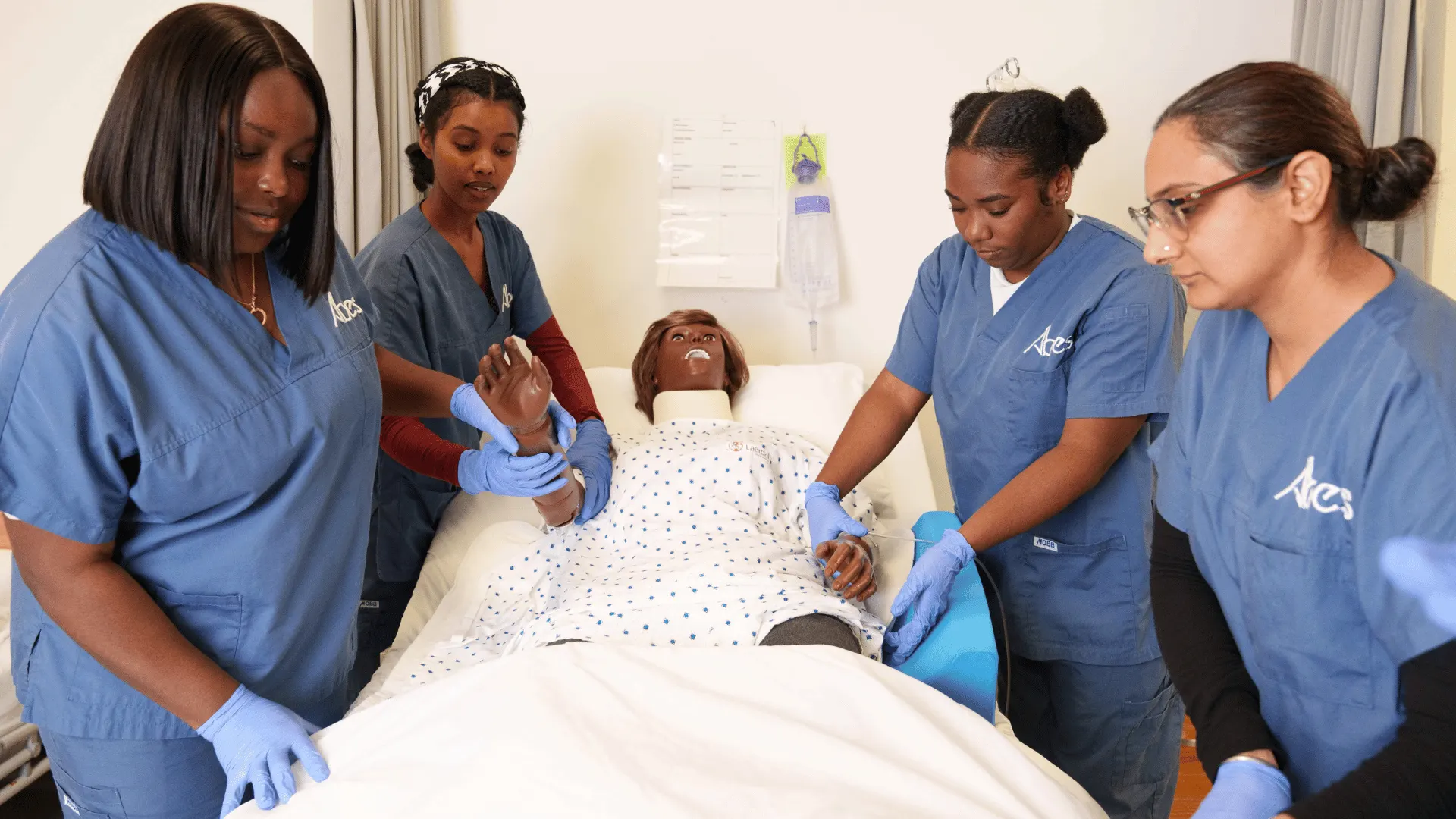
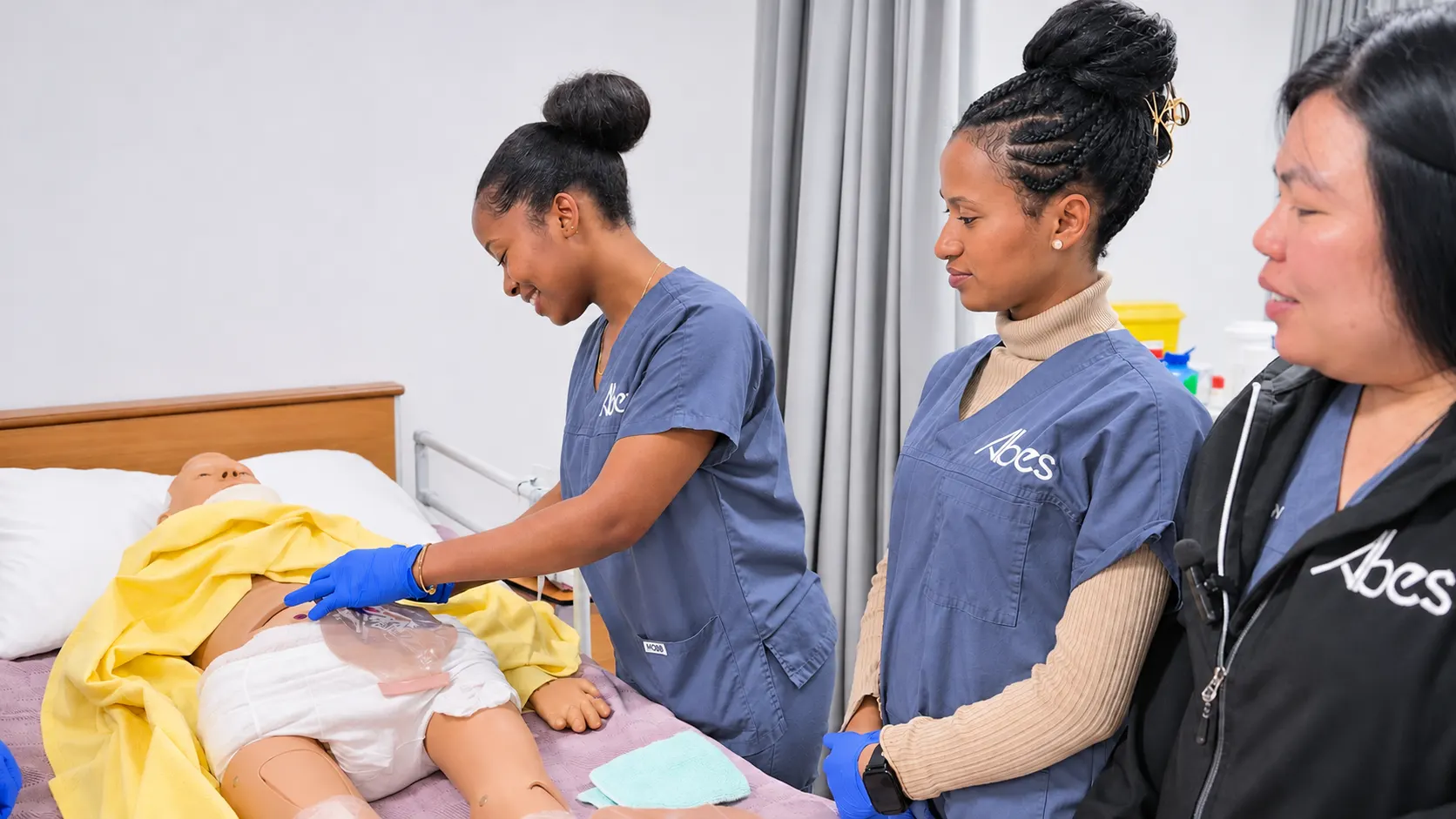
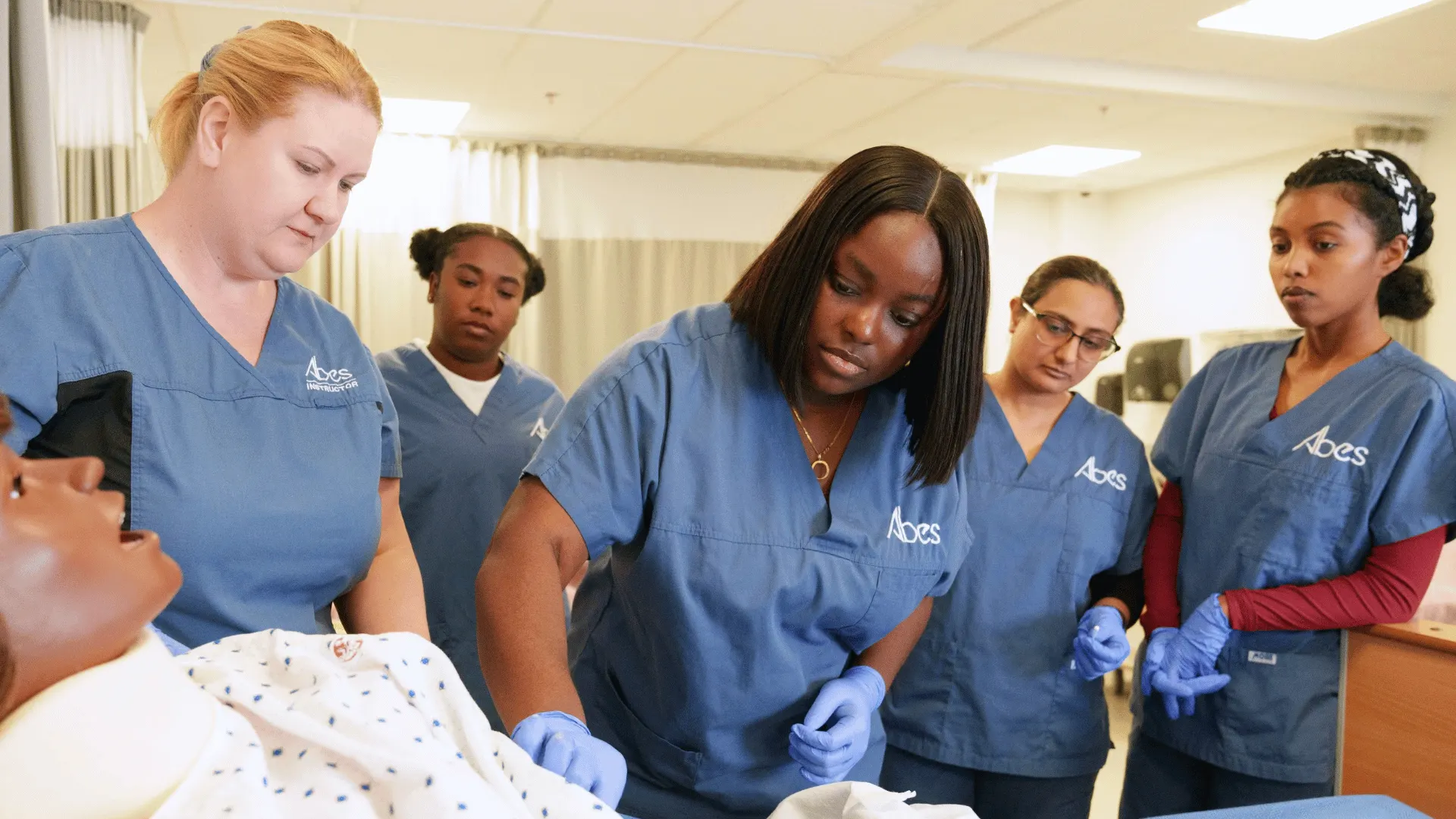
Hands-on training begins in our on-campus lab that is equipped with everything you need to apply your skills; from beds, lifts, catheters and mobility equipment, you will learn all procedures prior to entering the field.
Health Care Aide students will learn over 75 skills including: moving clients, perineal care, making an open, occupied and unoccupied bed, assisting a client with an affected limb to dress and many others.
Practicum placement included
ABES partners with industry leaders to connect you with employers and provide in-the-field experience. Often these partners hire graduates directly from their practicum, before graduation. This has been the key to our success over the last 35 years.
- Your supervised practicum
- 2 weeks
- Practicum partners
- Alberta Health Services (AHS)
- Age Care
- Covenant Health
Career outcomes
With current and projected future shortages of Health Care Aide workers in Alberta, your skills will be in high demand.
Where this program leads in Alberta
- Graduate placement rate
- 99.14%Source: ABES 2025 graduate employment rate
- Average wage in Alberta
- $17–$26.50hourly range$22.77average hourlySource: ALIS Government of Alberta
Day to day tasks
- Helping patients with activities such as bathing, grooming, and dressing
- Helping patients with feeding or exercise
- Assisting with simple wound care, respiratory equipment or urinary care
- Reporting on patient condition to nurses or other staff
Who's hiring?
- Alberta Health Services
- Bayshore HealthCare
- Carewest
- Covenant Health
- AgeCare
- Bethany Care Society
- The Good Samaritan Society (continuing care)
- CBI Health (home care)
Where does this credential take you?
Health Care Aide Program Reviews
Graduate stories
“The Health Care Aide program was well organized and focused on practical skills that are useful in real life and workplace settings.”
“The college offers a supportive learning environment with flexible options and hands-on training, which makes a solid foundation for your career.”
“I felt supported throughout my journey, and the training helped me gain confidence and knowledge to move forward in my career.”
Admissions
At ABES College, our experienced admissions advisors are here to help you find a program that fits your goals and your life. Talk to an advisor today and take the first step toward your future.
Admission requirements
Standard admission
- Grade 11 English
- CLBA 7 if English is your second language
- Canadian Citizen, Permanent Resident, Conventional Refugee Status
Mature admission
Students who have been out of high school for at least 2 years may apply as mature students. Requirements for mature students include:
- Successfully meeting the entry levels on ABES' Accuplacer assessment tests or equivalent
Health Care Aide Tuition
One investment. Funding available to most student applicants.
Licensing & accreditation
- Government of AlbertaLicensed to deliver the HCA Provincial Curriculum, which the Alberta government developed and owns (Curriculum 2019)Verify with Government of Alberta
- Alberta Advanced EducationLicensed private vocational school under the Private Vocational Training Act (Alberta)
- Years operating35 years of career training in Calgary — established 1991
ABES College Student Reviews
Health Care Aide Program Comparison
| What you are comparing | ABES College | Public college |
|---|---|---|
| Program length | 32 weeks | 2 termsSource: Bow Valley College: Health Care Aide program page (Program length) (2026) |
| Upcoming start dates | Continuous rolling intakes. See the next intake date above. | Winter, Spring, FallSource: Bow Valley College: Health Care Aide program page (Upcoming start dates) (2026) |
Frequently asked questions
Do I get a provincial credential?
Yes. After earning your certificate, apply to the College of LPNs and HCAs of Alberta (CLHA) for provisional registration and the Alberta HCA Registration Examination (AHRE). If you hold provisional registration and pass the exam, you can move to the general register.
Will I find work after I graduate?
Current demand for Health Care Aides is currently driven by an aging population, baby-boomer retirements, and ongoing health-care labour shortages. With 32,100 Health Care Aides employed across Alberta, the job market is hot and is likely to continue to be for the next few years.
How do I advance after I graduate?
Health Care Aide graduates can move into Senior / lead HCA, shift lead, or preceptor shifts with experience along. Some employers train HCA for specializations such as dementia, palliative, brain-injury, home care.
With more education such as a two-year diploma in Practical Nursing, students can grow in the nursing field; potentially continuing on to Registered Nursing.How is the curriculum at ABES different than other colleges?
The curriculum itself is the same; as a registered profession, all approved colleges and institutions must adhere to the same curriculum. What elevates our students' experience is our ongoing intakes that welcome smaller class sizes that allow students to have more access to instructors and have more opportunities to practice skills. A dedicated team of instructors and support staff ensure our students are supported in every part of their ABES journey; including securing practicum placements.
Articles about Health Care Aide
Revolutionizing Healthcare Education: The Power and Purpose of Simulation Training at ABES
What’s it like to be a Healthcare Aide?
Planning your studies
See all articles- How to Seamlessly Bridge the Gap from Health Care Education to Employment
- 6 Financial Assistance Options for ABES Students that Make Education Accessible
- Your Educational Journey at ABES College: Complete Guide to Admissions, Program Options & Student Life
- Career Colleges vs Traditional Universities in Alberta: What’s Right for You?