
Medical Device Reprocessing
Daytime In-Person
Delivered in partnership with Alberta Health Services (AHS), this program prepares students to work in one of the most crucial roles in keeping patients safe.
- Credential
- Certificate
- Program length
- 40 weeks (10 months)
- Supervised practicum
- 10 weeks
- ABES employment rate
- 88.89%
- Next start date
- Feb 1, 2027
- Delivery
- Daytime In-Person
Medical Device Reprocessing Program Overview
Our Medical Device Reprocessing Technician Program was created in 2008 in partnership with the Government of Alberta. Its purpose is to prepare skilled professionals for one of the most important roles in patient safety: cleaning, decontaminating, sterilizing and managing the medical devices that hospitals utilize every day. Students learn the same standards, policies and procedures used in Alberta’s hospitals, through modules developed and updated with our partner's input. This means our graduates enter the workforce ready for the expectations of a real reprocessing department.
Students also complete a practicum in AHS hospitals in Calgary. Working beside experienced reprocessing teams, they apply what they learned in class to real hospital equipment, workflows and quality controls. This hands-on experience builds their confidence and skill, and it gives them professional connections in the field.
What you'll learn
Communication for Health Care Professionals
Communication for Health Care Professionals
Builds the academic and workplace communication skills students need to succeed in the program and on the job. Covers study strategies, time management, professional writing, email etiquette, and communicating effectively with surgical teams in culturally diverse settings.
Medical Terminology
Medical Terminology
Introduces the language of health care, organized by body system. Students learn word structure, common abbreviations, and the terms used daily in surgical and sterile processing departments.
Computer and Productivity Skills
Computer and Productivity Skills
Develops practical computer skills in the Windows environment and the software used in health care workplaces. Includes an introduction to electronic instrument tracking systems.
Anatomy, Physiology and Microbiology
Anatomy, Physiology and Microbiology
Reviews the structure and function of the body’s cells, tissues and organ systems, and the microorganisms that cause infection. Students learn how microbes spread and how they are controlled and destroyed.
The Profession of Medical Device Reprocessing
The Profession of Medical Device Reprocessing
Explores the role of the reprocessing technician, department organization, career pathways and professional certification. Covers the standards and agencies governing the field, including CSA Group, Health Canada and HSPA, and workplace safety under Alberta Occupational Health and Safety.
Infection Prevention and Control
Infection Prevention and Control
Covers routine practices, hand hygiene, personal protective equipment, aseptic technique and bloodborne pathogen safety. Emphasizes the technician’s responsibility in breaking the chain of infection.
Decontamination and Disinfection
Decontamination and Disinfection
Details cleaning and decontamination of reusable medical devices according to manufacturers’ instructions for use (IFU) and CSA standards. Covers point-of-use care, safe transport, cleaning agents, water quality, and the levels of disinfection.
Surgical Instrumentation
Surgical Instrumentation
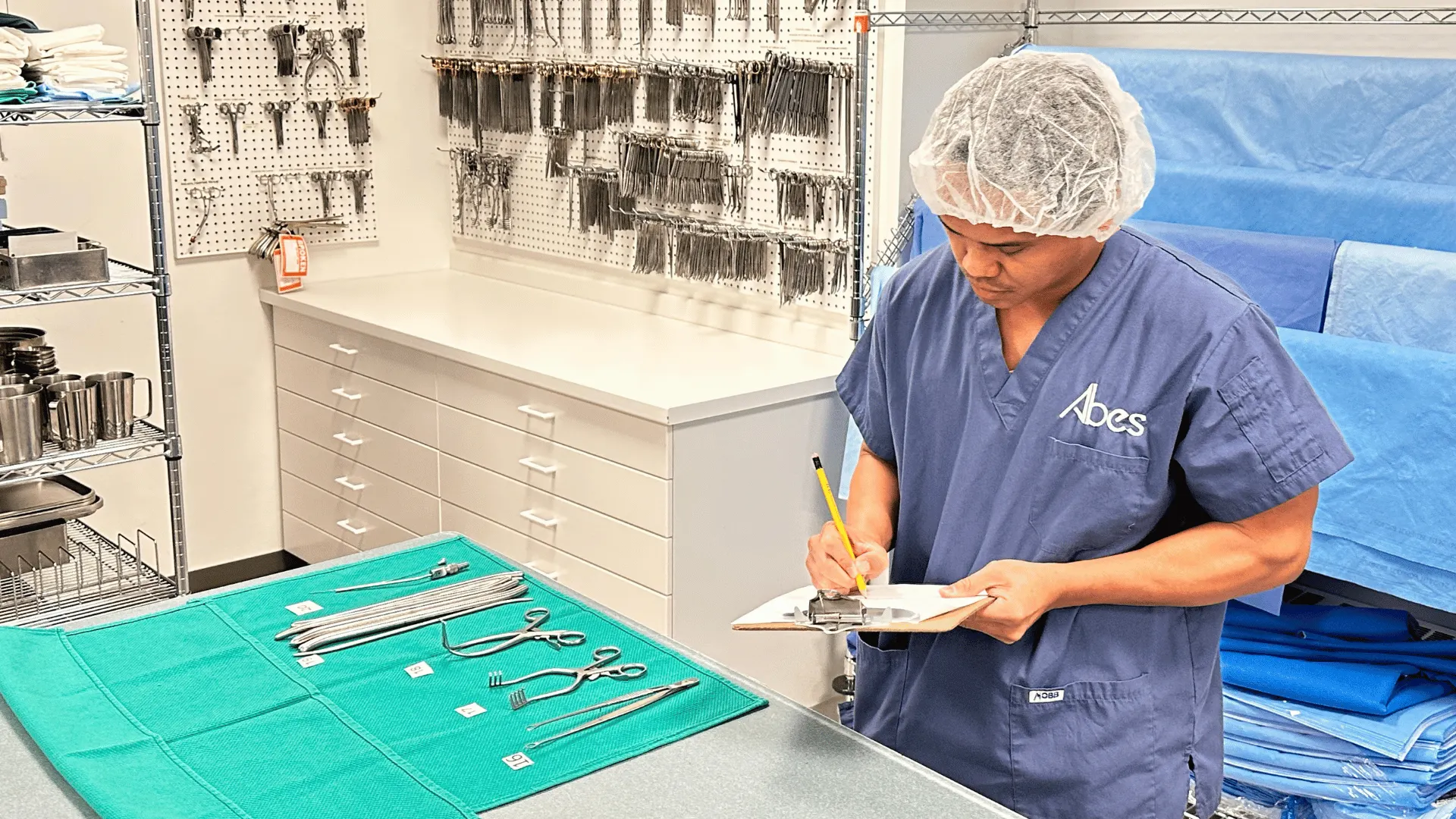
Teaches students to identify, inspect, test and care for surgical instruments, from basic to complex and powered devices. Includes instrument tray assembly for common procedures.
Packaging and Sterilization
Packaging and Sterilization
Covers packaging materials, wrapping techniques, labelling and sterile storage, followed by high-temperature and low-temperature sterilization methods. Students learn quality monitoring, including chemical and biological indicators and Bowie-Dick testing, and the limited role of immediate-use steam sterilization.
Endoscope Reprocessing
Endoscope Reprocessing
Provides focused training on flexible endoscope nomenclature, handling, leak testing and high-level disinfection. Includes common reprocessing errors and their impact on device damage and patient safety, using Olympus and Pentax scopes.
Inventory, Distribution and Equipment Management
Inventory, Distribution and Equipment Management
Covers inventory control, par levels, case cart assembly, distribution to clinical units and the tracking of patient care equipment through barcode and RFID systems. Also addresses ambulatory, dental and other non-hospital processing environments.
Clinical Lab
Clinical Lab
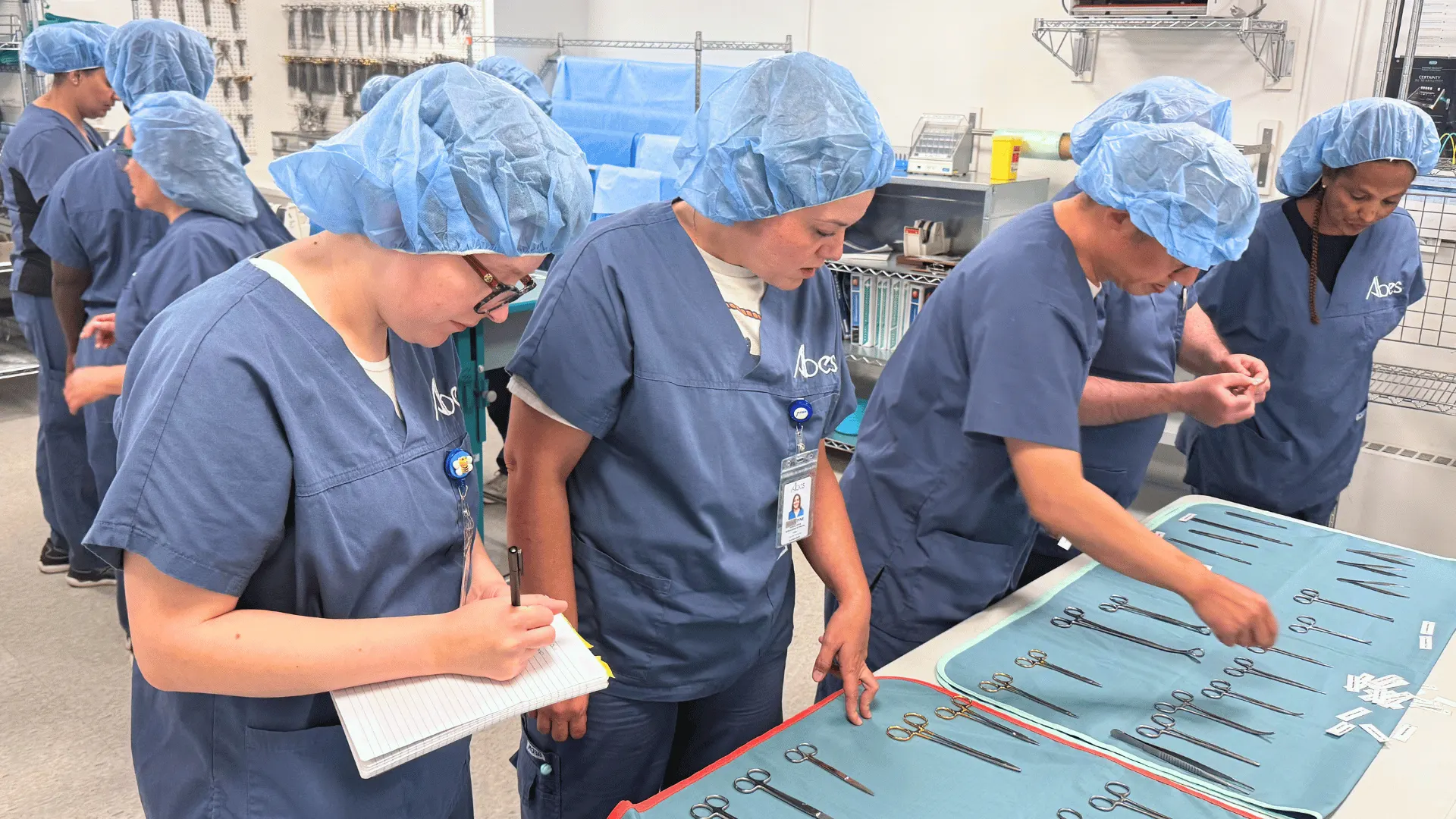
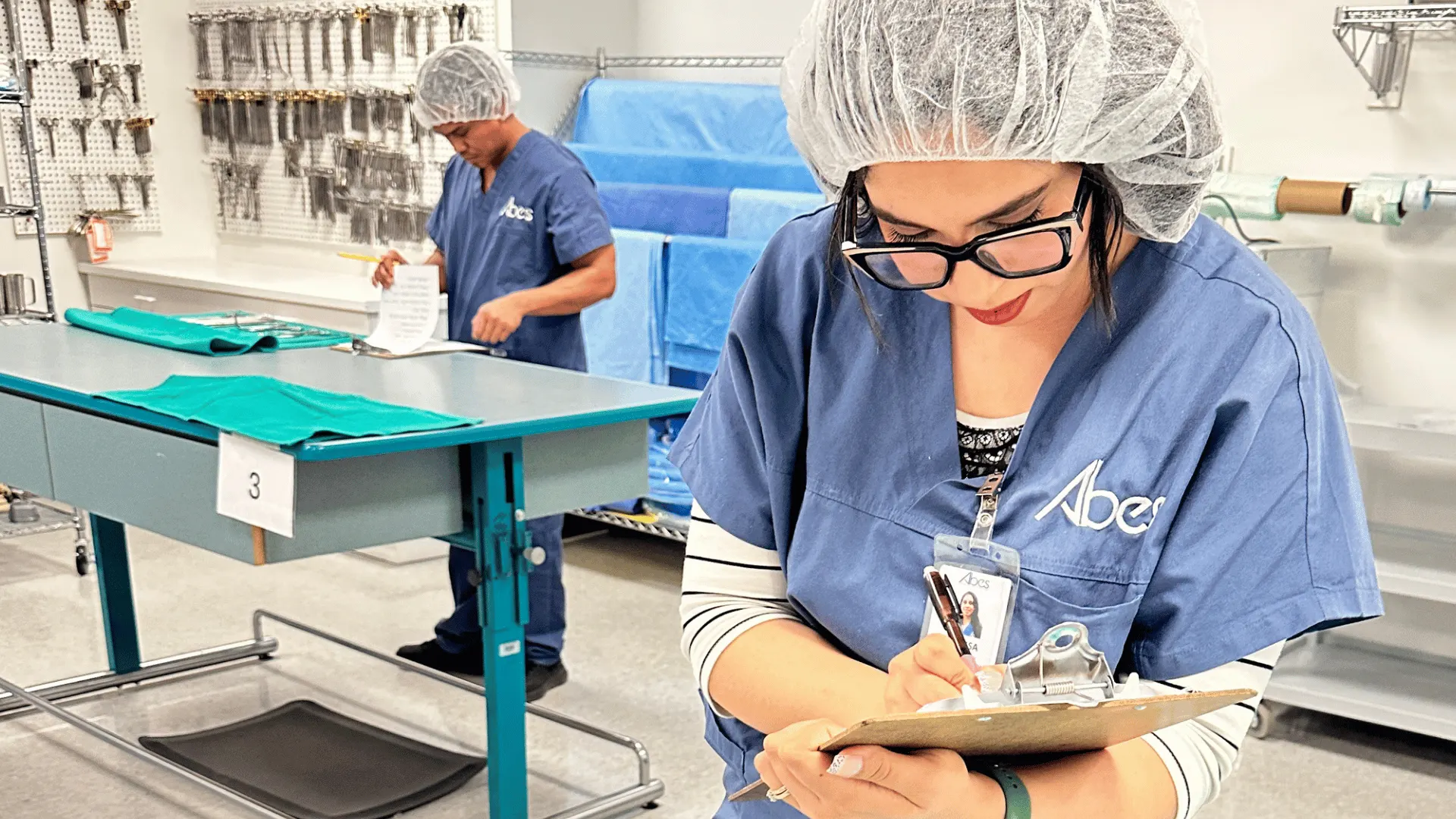
Hands-on practice in ABES’s reprocessing lab under instructor supervision. Students apply decontamination, inspection, assembly, packaging and sterilization skills in a simulated department.
Final Practicum
Final Practicum
A supervised preceptorship in a sterile processing department, rotating through decontamination, preparation and packaging, sterilization, sterile storage and distribution. Practicum hours count toward the hands-on experience required for HSPA’s CRCST certification.
What training here actually looks like
Hands-on interactive learning
Our instructors come from many years of experience in the field, offering practical experience and hands-on training. Classes are engaging making it easier to learn and retain course material.
Students practice procedures and skills in our on-campus reprocessing laboratory on a weekly basis. Within laboratory hours our instructors demonstrate and assess students on their ability to perform procedures such as instrument function and assembly, basin wrapping, tray and set assembly, sterilization cart loading and many more. This is what sets our students apart on the field and what has made this program successful over the last 18 years.
Practicum placement included
ABES partners with industry leaders to connect you with employers and provide in-the-field experience. Often these partners hire graduates directly from their practicum, before graduation. This has been the key to our success over the last 35 years.
- Your supervised practicum
- 8 weeks320 hrs
- Practicum partners
- Alberta Health Services (AHS)
Career outcomes
Graduates of this comprehensive Alberta Business & Educational Services (ABES) program will write the International Association of Healthcare Central Service Material Management (IAHCSMM) examination, a prerequisite to employment as a Medical Device Reprocessing Technician in Alberta.
Where this program leads in Alberta
- Graduate placement rate
- 88.89%Source: ABES 2025 graduate employment rate
- Average wage in Alberta
- $19–$31.41hourly range$23.85average hourlySource: ALIS Government of Alberta
Day to day tasks
- Decontaminate surgical equipment
- Cleaning and sanitizing work area
- Disinfect, store, prep, test and package surgical and medical equipment
- Inspect and maintain supplies used in surgery
Who's hiring?
- Rockyview Hospital
- Foothills Hospital
- Peter Lougheed Hospital
- South Health Campus Hospital
- Alberta Children’s Hospital
- Optical Clinics
- Dental Clinics
- Clearpoint Health Network
- Canadian Surgery Solutions
Where does this credential take you?
Medical Device Reprocessing Program Reviews
Graduate stories
“The ABES coordinator and management are committed to providing conducive learning facilities and are passionate about the welfare of all students.”
“They are very informative and teach you exactly what you need to know and how to succeed in the course and your practicum.”
“This is the most helpful school for immigrants to find their health care career in a short time in Canada.”
Admissions
At ABES College, our experienced admissions advisors are here to help you find a program that fits your goals and your life. Talk to an advisor today and take the first step toward your future.
Admission requirements
- CLB 7 if English is your second language
- 2 years post-secondary education
- Canadian Citizen, Permanent Resident, Conventional Refugee Status
Medical Device Reprocessing Tuition
One investment. Funding available to most student applicants.
Licensing & accreditation
- Alberta Advanced EducationLicensed private vocational school under the Private Vocational Training Act (Alberta)Verify with Alberta Private Career College Registry
- Years operating35 years of career training in Calgary — established 1991
ABES College Student Reviews
Medical Device Reprocessing Program Comparison
| What you are comparing | ABES College | SAIT |
|---|---|---|
| Program length | 40 Weeks | 24 WeeksSource: SAIT: Medical Device Reprocessing Technician program page (Program length) (2026) |
| Practicum Placement | Guaranteed in Calgary | Within your Community | May take place outside Calgary | May be delayed after theorySource: SAIT: Medical Device Reprocessing Technician program page (Practicum Placement) (2026) |
| Upcoming start dates | February 1, 2027, July 26, 2027 | Winter 2027, Spring 2027, Summer 2027, Fall 2027Source: SAIT: Medical Device Reprocessing Technician program page (Upcoming start dates) (2026) |
| Cost | $14,995 (all included) | $8,929.75 (tuition only)Source: SAIT: Medical Device Reprocessing Technician program page (Cost) (2026) |
Frequently asked questions
How long is the Medical Device Reprocessing program?
The certificate runs 40 weeks full-time at our Calgary campus and includes an 8-week supervised practicum. It is one of our longer programs because sterile processing is a technical, safety-critical field.
What are the admission requirements?
You must be at least 18 by your start date and have Grade 10 English, or a Canadian Language Benchmark of 7 or higher if English is your second language. This program also asks for two years of post-secondary training in health care or life sciences.
Is the program connected to Alberta Health Services?
Yes. Medical Device Reprocessing is delivered in partnership with Alberta Health Services (AHS). That connection shapes both what you learn and where you can be placed.
What does a Medical Device Reprocessing Technician do?
MDRTs decontaminate, inspect, assemble, package, and sterilize surgical and medical instruments so they are safe for the next patient. They keep hospital operating rooms and clinics supplied with sterile equipment.
What is the practicum?
You complete an 8-week full-time practicum in a reprocessing department before you graduate, working alongside experienced staff in a hospital central processing setting.
When does the next intake start?
This is a 40-week program, so it runs a few intakes each year rather than monthly starts. The next start date is shown at the top of this page, and an admissions advisor can confirm the upcoming intakes and check that you meet the entry requirements.
What do Medical Device Reprocessing Technicians earn in Alberta?
ALIS puts starting pay around $20–$22/hr (about $42,000 a year full-time), typical pay at $22.50–$24.55/hr (about $48,000), and experienced pay at $30–$32/hr (about $62,000). Wages are Government of Alberta ALIS 2023 Alberta Wage & Salary Survey and Job Bank Canada figures. The hourly rate is the reliable anchor; annual amounts assume full-time work, so part-time or casual roles earn less.
Will I find work after I graduate?
88.89% of ABES graduates from this program are employed. On the wider Alberta picture: strong long-term demand from boomer retirements (ALIS “Hot” forecast; Job Bank rates the near term “moderate”); about 5,190 employed. Certification is mandatory to be hired.
Who hires Medical Device Reprocessing Technicians in Calgary?
Alberta Health Services hospital sterile-processing departments (Rockyview, Foothills, Peter Lougheed, South Health Campus, Alberta Children’s) are the dominant employer; private surgical facilities (Canadian Surgery Solutions, Clearpoint Health Network); dental, eye and specialty clinics.
How do I advance after I graduate?
With experience alone: Senior / lead / charge MDR technician, MDR educator/trainer, or quality & tracking coordinator. ALIS notes advancement is limited without further education. Ceiling around $31–$32/hr (low-to-mid $60,000s full-time). With further study: Licensed Practical Nurse (LPN): ~2-yr diploma → ~$31.91/hr (~$51,571/yr) — the clearest step up. Health Care Aide or OR aide/attendant: lateral moves into hands-on patient care at similar pay. Registered Nurse (RN): 4-yr BScN — the longer route to the highest pay.
Articles about Medical Device Reprocessing
Training and Certification Programs for Medical Device Preprocessing in Alberta
Explore a Career as a Medical Device Reprocessing Technician: FAQs, Job Demand & More
The Importance of Sterile Equipment and Supplies: Learn to be a Medical Device Reprocessing Technician at ABES medical school in Calgary
Planning your studies
See all articles- How to Seamlessly Bridge the Gap from Health Care Education to Employment
- 6 Financial Assistance Options for ABES Students that Make Education Accessible
- Your Educational Journey at ABES College: Complete Guide to Admissions, Program Options & Student Life
- Career Colleges vs Traditional Universities in Alberta: What’s Right for You?