

A fresh start in Canada
Moving to a new country takes courage, and finding the right career is often the next big challenge. If you want work that is steady and meaningful, health care is worth a closer look. Many roles value compassion, patience and a strong work ethic as much as technical skill, and you don’t need a Canadian degree or years of experience to enter the field. What you need is focused training and a school that connects you with employers.
That’s what ABES College does. More than 12,000 Calgarians, many of them newcomers, have trained with us since 1991, and many have gone on to build long careers in health care.
Why health care is a strong choice for newcomers in Alberta
Alberta needs health care workers. The province’s short-term employment forecast projects a shortage of thousands of nurses and health care aides through 2026, driven by an aging population and many current workers retiring. Health care and social assistance is also one of Alberta’s fastest-growing employment sectors.
When employers are short-staffed, they hire, and that creates openings for people entering the field. For internationally trained professionals, a focused program can be a practical first step. Pharmacists, for example, often begin their Canadian careers through our Pharmacy Assistant program. It’s a way to gain Canadian work experience, learn how the pharmacy system works here and build a network while working toward licensing as a pharmacist in Canada.
If you’re weighing your options, our guide to health care careers in Calgary covers what’s available.
You can train in months, not years
A four-year degree isn’t the only route into health care. A few months of hands-on training at a school that connects you with employers can be enough to start working in health care.
Let’s take the Health Care Aide (HCA) program as an example. It runs for 32 weeks (about eight months) and includes hands-on training in real workplaces: two clinical placements guided by an ABES instructor, plus a 320-hour practicum (a work placement with an Alberta health care employer). Health Care Aides support patients in hospitals, long-term care homes, senior living communities, hospices and private home care, and they’re among the roles Alberta is hiring for most right now.
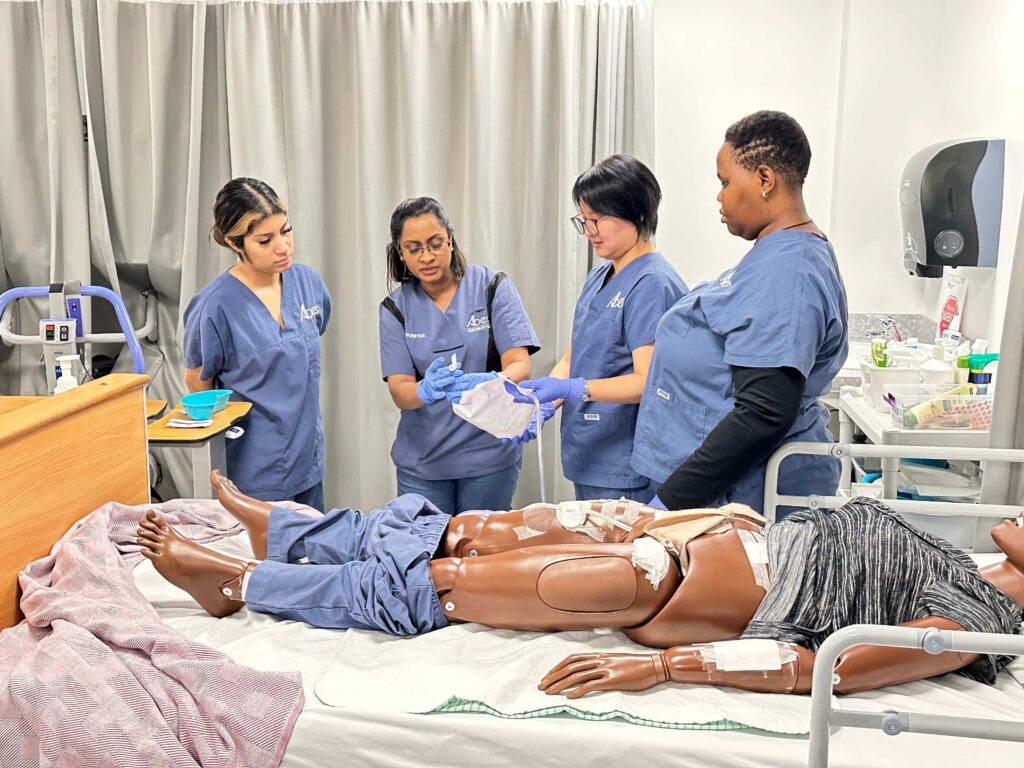
Our HCA program is one of the most common starting points for newcomers, but it’s not the only one. Other programs include:
- Community Support Worker (Addiction & Disability): support people living with addiction and disability, children, women, newcomers and many other vulnerable populations in your community.
- Medical Laboratory Assistant: work in Alberta’s diagnostic labs, drawing blood, collecting samples for testing and running electrocardiograms (ECGs, tests that record the heart’s activity).
- Pharmacy Assistant: help patients at pharmacy counters, prepare and mix medications (called compounding) and help keep patients safe.
- Unit Clerk + Medical Office Assistant: administrative roles in health care, including hospital units, long-term care facilities, physician offices and chiropractic offices, among others.
- Dental Office Administration: administration in dental offices.
- Medical Device Reprocessing: cleaning, disinfecting, checking and repackaging surgical and procedure equipment in hospitals and other clinical settings.
Because we offer continuous start dates, you don’t have to wait for September. You could start as soon as next month.
How do you know the school is recognized?
In Alberta, private career colleges must be accredited under the Private Vocational Training Act (PVTA), a provincial framework that protects students. ABES College is accredited under the PVTA. That means our programs are approved by the Government of Alberta, our instructors must be qualified, and students are protected by student contracts, refund policies and regular government compliance reviews.
ABES College has trained health care professionals for 35 years. During that time, partners such as Alberta Health Services and Alberta Precision Laboratories have played a key role in the quality of education provided to ABES students. For instance, ABES is currently the only private college in Alberta that has been granted the Practical Nursing curriculum and the privilege of piloting the new Government of Alberta Health Care Aide curriculum.
How much does the training cost?
Many applicants qualify for financial aid, and funding is available for those who qualify. All ABES programs are approved for federal and provincial funding through Student Aid Alberta, so if you’re a Permanent Resident, a Canadian Citizen or a Refugee Status holder, you’re eligible to apply. Applicants who arrived in Canada recently, who have children or who didn’t work in the past year may also qualify for grants (money you don’t have to pay back).
Applying for student aid can feel confusing. Our Admissions Advisors know the programs well and can explain what you qualify for. You’ll find more detail on our Financial Options page.
The ABES difference
Community matters at ABES. Most of our program leads, instructors and admin staff have been with ABES for over 10 years, and they understand that a support system makes settling in and starting over easier. Class sizes are intentionally small, so you get more time with your instructors.
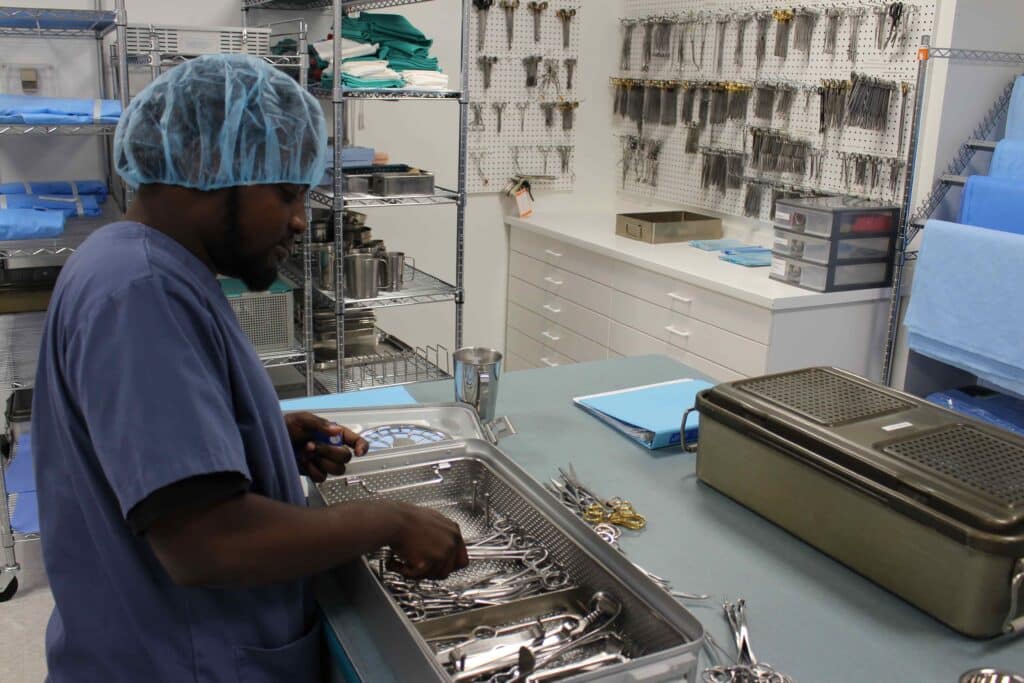
Every program includes a practicum. We currently hold more than 390 practicum contracts across Calgary and beyond, and we match each placement to your strengths to give you a strong start with employers. Many students receive job offers during their practicum. Across our programs, our graduates have an average employment rate of about 95%.
For more on getting from training to your first job, read how we help you move from education to employment.
For 35 years, that has been our focus: practical training, real workplace experience and strong ties to Alberta employers.
Talk to an Admissions Advisor
Book a call and an admissions advisor will answer your questions and help you find the right program.
Schedule your discovery call →
Prefer to reach out directly? Contact us or call 403.232.8758.